
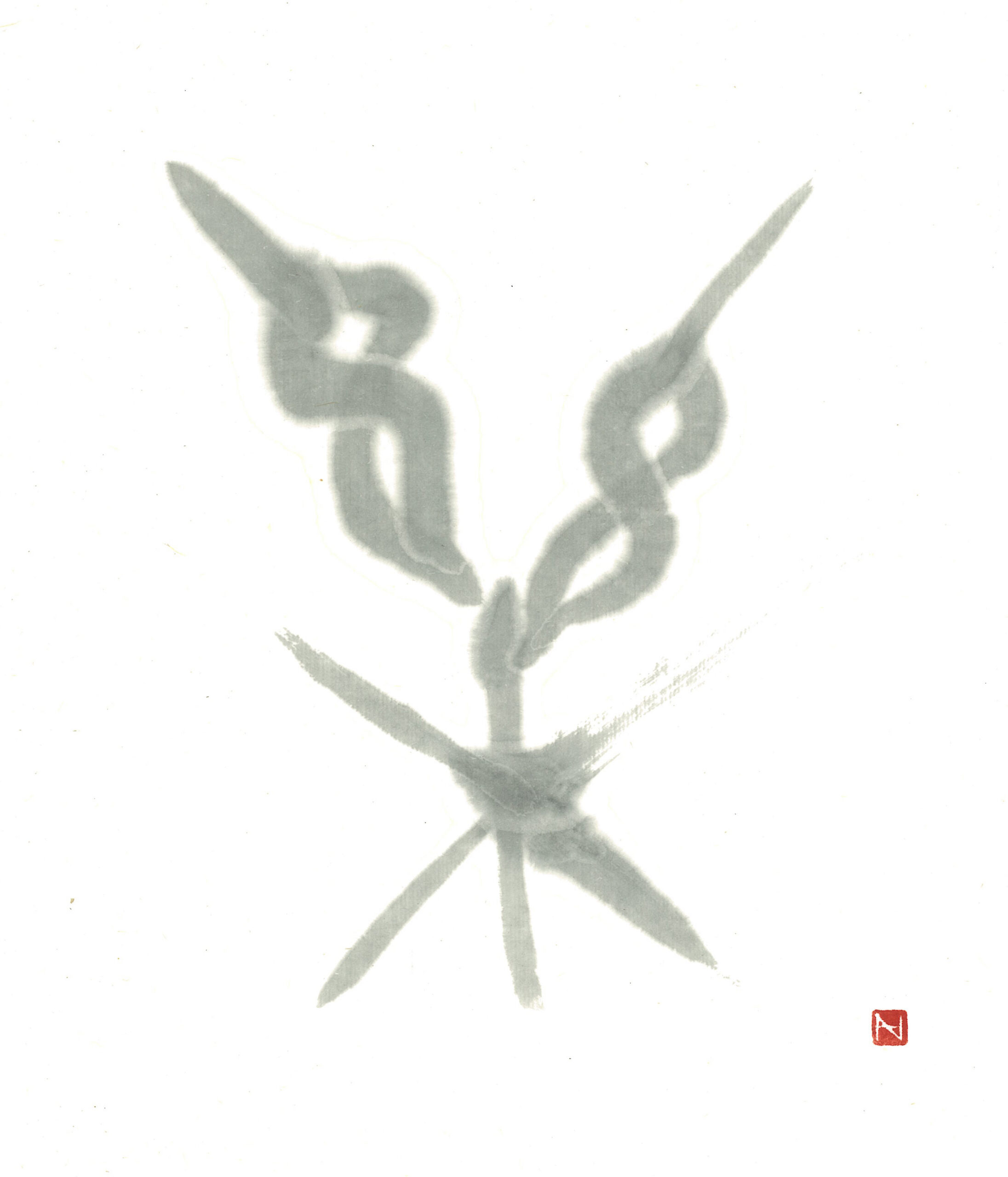
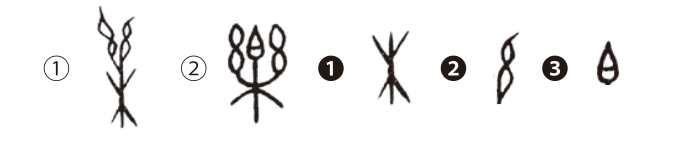
3300 年前の漢字の祖先「甲骨文字」では「楽(樂)
」を1と、金文(青銅器の銘文)
では2と表す。この字の解釈は二説ある。一つは「木台❶の上に絲(糸)
❷がある形
で琴瑟を意味し、後に調弦の道具である白❸が付く」
、もう一つは「木台❶の上に縄
❷でくくられた小鼓を意味する」であり、どちらにしてもこの字は楽器や音楽に関
係している。今の所、甲骨文での用例は地名しかないが、
『論語』の冒頭に「不亦楽
乎(また楽しからずや)
」とあるように、周代には「たのしい」という意味が出てく
る。人が楽(楽器)を使い音楽を奏でることが「楽しさ」につながっているのであろう。
現代で言えば音楽鑑賞やカラオケでご満悦な様子を「楽」と想像していいようであ
る。
The Character “Enjoyment”
Ideogram
The early form of the character “enjoyment” was scribed 3300 years ago in China
on bones and tortoise shells as in 1 and later on bronze ware as in 2. There are two
ways to interpret the character. One is that it depicted a string instrument called
Kinshitsu with strings ❷on top of the wooden stand❶ (to which 白❸a tuning tool was
added at a later time). The other is that it represented a small hand drum tied to the
stand with a rope. In either case, the character had something to do with music or a
musical instrument. So far, the early form on bones and tortoise shells can only be
found in the names of places. As is stated at the beginning of『Rongo』, “it is
enjoyable,” the word enjoyable appears in the Chou era. Playing instruments must
have been enjoyable in those days as listening to music or singing to karaoke is now
so with us.
Written: July, 2012
Paper: Tangosi 100% Kouzo (2012) by Kenzo Miyake
Ink : Niwaduru(1960) by Nansyoen
Brush : Karyoujyouhuku bristle brush by Shanhaikougei
この紙は丸重製紙企業組合〈国産雁皮木材 P 漉き合せ紙〉を使用