
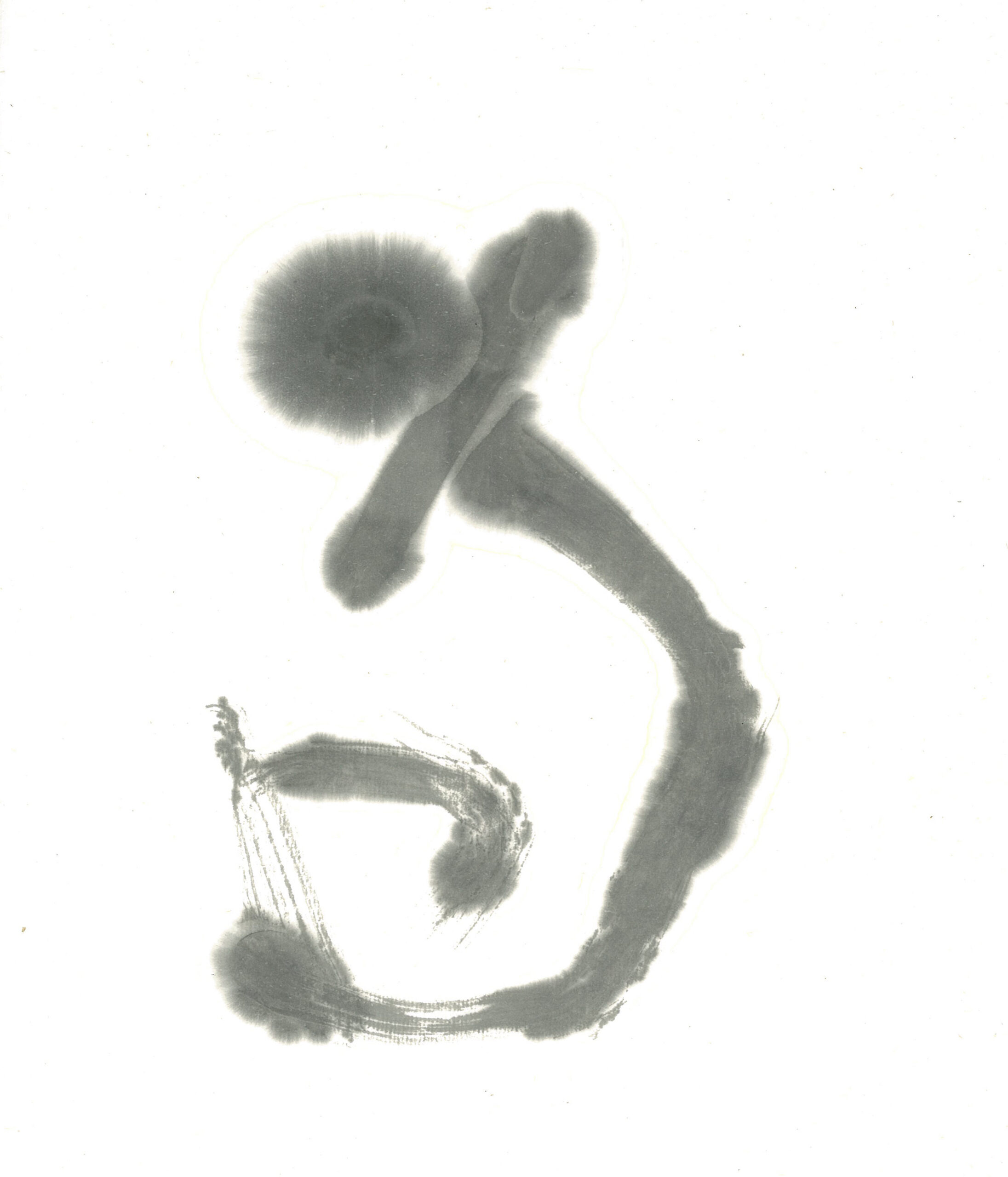
3300 年前の漢字の祖先「甲骨文字」では、
雲を12などの形に表す。
「❶」は上空を、
「❷」は雲气(上空の蒸気)の回転を意味すると考えられる。後にこの形の上に雨冠
が付いて「雲」となった。
「3」は「上」の字であり「❸は❹よりも上部にある」と
いう抽象概念を文字化した指事文字である。ちなみに「下」は4の形である。
現在最古の字書とされる『説文解字』
(AD100 年)
「雲」の項目には「古文」とし
て5の形がある。すでに消滅した甲骨文字が伝わったものかもしれない。また、同
書に雲は「山川の气なり」とある。气は汽の元で蒸気(ゆげ)を意味する。当時、
水蒸気が雲を起こすことは、すでに認められていたのであろう。古代人は霧や霞、
そして湯気が立つのを見て、上空で蒸気が渦巻いているとでも考えたのであろう。

製作:2012 年 7 月
紙:中嶋久実子製
楮 100%(2012 年製造)
墨:古梅園製「茶墨」(1973 年製造)
筆:玉川堂 製「長鋒捲心」
水:コントレックス
The Character “Cloud”
Ideogram
The early form of the character “cloud” was scribed 3300 years ago in China on
bones and tortoise shells as in 1, 2. The ❶ represents the sky above while ❷, the
motion of the vapor there. Later 雨 (meaning “rain”) was added on the top resulting
in the form 雲 . The 3 represents “above” coming from the notion that ❸ is above
❹. The form for “below” is 4. In the oldest letter/character dictionary『 説文解字 』
(100AD) the character as in 5 is found. The early form may have been passed on. In
the same dictionary it is stated that clouds are the vapor of the mountains and rivers.
雲 is the original form of 汽 representing “vapor.” Even in those days people seemed
to have recognized that vapor created clouds. Whenever the ancients saw fogs and
hazes, they may have imagined vapor swirling in the sky.
Written: July, 2012
Paper: Tosasi 100% kouzo (2012) by Kumiko Nakajima
Ink : Chaboku by Kobaien (1973)
Brush : Chouhou kensin bristle brush by Gyokusendo